
The State of Sponsored Content: Key Figures and Trends
Sponsored content is now a standard part of digital marketing. Recent data on ad blocking, trust, creators and native ad spend shows where the market stands.

Summary
In recent years, sponsored content has moved from a side experiment to a regular line in many marketing budgets. Demand for sponsored articles keeps rising, as more businesses see the value of advertising that does not interrupt the reader.
In short:
More publishers offer sponsored formats, and more advertisers buy them. For many companies, including some of the biggest brands, sponsored content is now a standard part of digital marketing, and the available data shows it holds attention better than classic display ads.
This article looks at where the sponsored content market stands today, what is driving it, and how the trend is likely to continue to grow in the following years.
Why Sponsored Content?
Let's start with why sponsored content matters in a world where almost everyone is online.
More than 6 billion people now use the internet, 73.2% of the global population, so the reach of online advertising is obvious. But users have grown tired of classic digital ads, which they see as distractions that pull them away from what they came to do (for example, find the information they were looking for).
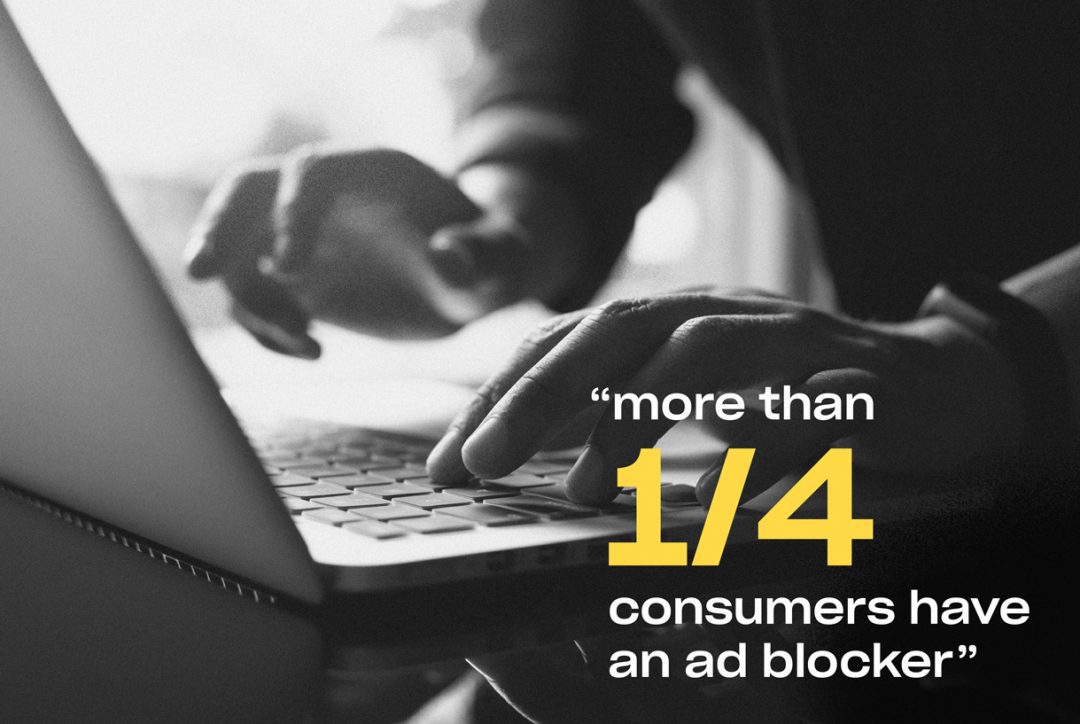
The numbers confirm it. According to eyeo's 2026 ad-blocking report, about 1.1 billion people used an ad blocker at the end of 2025, or 30% of all internet users, and mobile ad blocking grew 27% since 2023. Banner ads are still bought in large volumes, but they compete for an audience that has learned to ignore or block them.
Unsurprisingly, more advertisers are turning to formats people choose to read, watch or listen to. Whether as articles, images or videos, sponsored content has become a mainstream way to reach audiences.
The figures below show where the market stands today.
Sponsored Content Is a Standard Offer for Publishers
Sponsored content was already common years ago: a 2015 Inc.com study found that three-quarters of publishers and media outlets had published sponsored content. Since then, many publishers have built dedicated branded content teams and offers. On Getfluence alone, brands can choose from more than 70,000 vetted media outlets that accept sponsored articles.
Creators Have Opened New Territories
The term sponsored content first referred to articles or visuals published on websites. Today, it also covers social media posts, videos and podcasts made with creators. The IAB projects US creator economy ad spend at $37 billion in 2025, up 26% in a year, and 61% of marketers surveyed by Kantar expect to increase their influencer and creator budgets. Consumers respond: Edelman found that among people who follow creators, 37% tried a brand for the first time because of a creator in the last six months.
Trust Is What Makes Sponsored Content Work
Audiences are more open to advertising than a few years ago: in Kantar's Media Reactions 2025 study, 57% of consumers have a positive attitude toward ads, and online sponsored events now rank 7th among people's preferred ad channels, the highest position ever for a native online channel. But trust is earned, not bought. Edelman's 2026 Trust and Brands report shows that 41% of people are most influenced by what others say about a brand, against 20% by what the brand says about itself.
The choice of media matters too. The Reuters Institute reports that trust in news fell to 37% across 48 markets in 2026, while the 2026 Edelman Trust Barometer puts trust in media at 54% on average. Publishing in outlets your audience already trusts, with clear labeling, is what turns a paid placement into credible coverage.
Native Advertising Keeps Growing
Long-range forecasts on this market have often been too bold, so it is better to look at the most recent ones. EMARKETER expects US native display ad spending to grow 13.1% in 2026 to $147.98 billion. It also notes that native's share of total display is declining as connected TV and retail media expand, a reminder that sponsored content competes with many other formats for the same budgets.
Ad Budgets Keep Moving to Digital
Global advertising is still growing: WARC forecasts global ad spend of $1.34 trillion in 2026, up 11.9%, with social media alone at $394.6 billion. In the US, the IAB and PwC report internet ad revenue of $294.6 billion in 2025, of which $81.6 billion went to display (a category that includes banners, sponsorships and native formats).
Search is changing at the same time. Google says AI Overviews now reach more than 2.5 billion monthly users, and these answers draw on published sources such as media articles. For advertisers, this is one more reason to be present in trusted third-party media and not only in ad slots.
In Summary
The data points in one direction. Advertisers are looking for formats that respect the reader, audiences trust third-party voices more than brand messages, and spending on native and sponsored formats keeps rising, even as competition for budgets gets tougher.
Whether your goal is SEO, brand awareness or visibility in AI answers, sponsored content can help businesses everywhere. It is not tied to one country either: most of the figures in this article come from global studies. Backlinks from relevant media help your rankings, and brand mentions in trusted outlets help AI engines recognize you; the two work together.
For advertisers, it has also become much easier to work with influential media. Platforms like Getfluence connect more than 5,000 brands and agencies with over 70,000 vetted media outlets, so you can publish sponsored articles on sites that fit your sector, in many countries.
Learn more about how Getfluence can simplify your sponsored content campaigns here.