
How to adapt your link building strategy to Google AI Overviews and AI Mode
Google's SGE has become AI Overviews and AI Mode, launched in France in July 2026. Here is what these AI answers change for your link building, and how to stay visible.
Summary
Google's Search Generative Experience (SGE) no longer exists under that name. The experiment Google ran in Search Labs from May 2023 became AI Overviews in May 2024, and it has since been joined by AI Mode, a full conversational search experience.
In France, both features arrived on 22 July 2026. According to Google France's announcement, AI Overviews (Aperçus IA) and AI Mode (Mode IA) are now available on mobile, desktop and in the Google app on Android and iOS, with AI Mode running on Gemini 3.5.
For marketers and SEO professionals, this is no longer a test to watch from a distance. Generative answers now sit at the top of many results pages, in English and in French, and they change how visitors reach your site.
With an emphasis on answering the user's question directly, these features push SEO towards content that is useful, well sourced and present on the sites that Google trusts.
In the following sections, we explain what AI Overviews and AI Mode are, what they change for your link building strategy, and what stays the same.
We also show how working with Getfluence can turn these updates into an opportunity for growth and visibility in the digital space.
Understanding Google AI Overviews and AI Mode
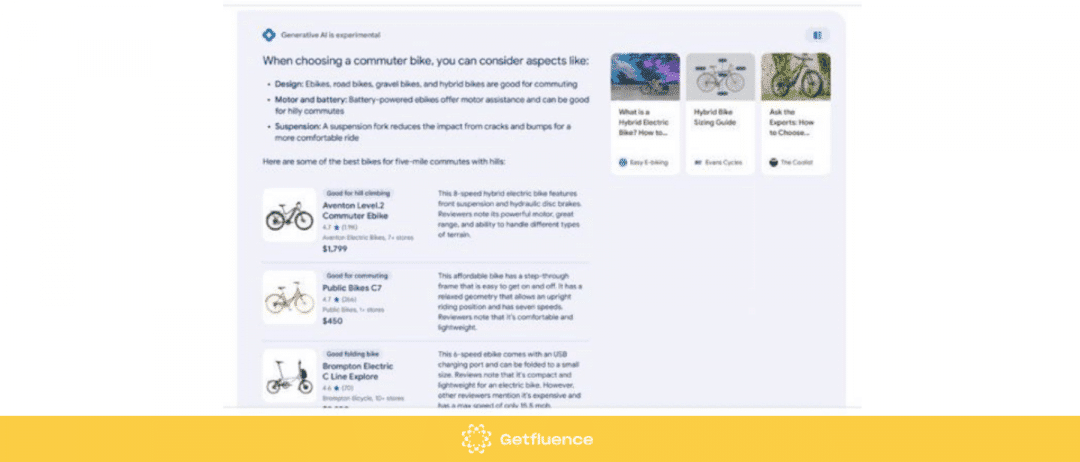
Google first tested generative answers with SGE in 2023, then rolled them out to everyone in the US as AI Overviews in 2024. AI Mode followed: it started rolling out to all US users in May 2025 and reached more than 200 countries and territories by October 2025, before launching in France in July 2026.
The scale is now significant. At Google I/O 2026, Sundar Pichai said that AI Overviews had more than 2.5 billion monthly active users and that AI Mode had passed 1 billion monthly active users within about a year of launch.
What Are AI Overviews and AI Mode?
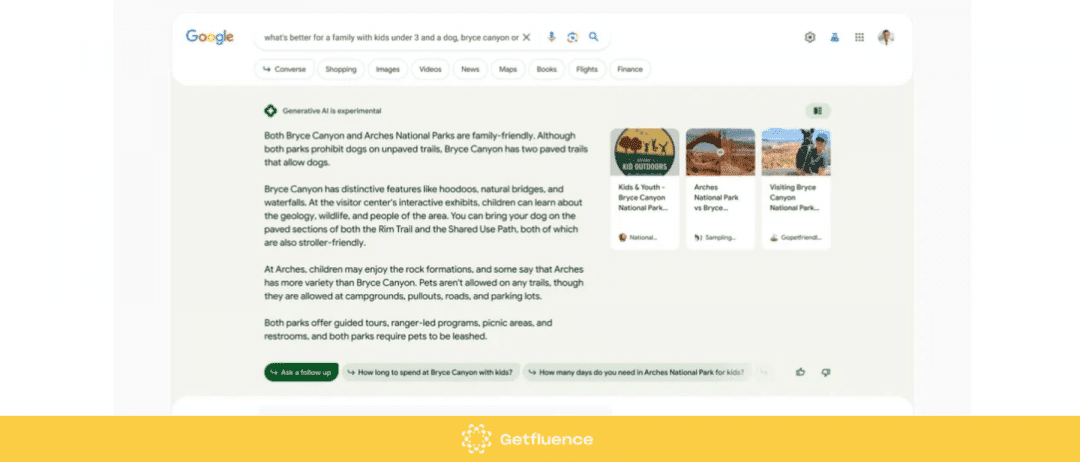
AI Overviews are short generated summaries that appear above the classic results for some queries. They answer the question in a few lines and list the pages used as sources.
AI Mode goes further. It is a separate, conversational search experience where users ask longer questions, follow up, and get a structured answer with links. Google France notes that it accepts questions typed, spoken or asked with an image.
In both cases, Google uses AI to understand the intent behind a query and to put together an answer from several sources. The results page becomes less a list of ten links and more an answer with a selection of cited pages.
Key Focus Areas and Implications for Link Building
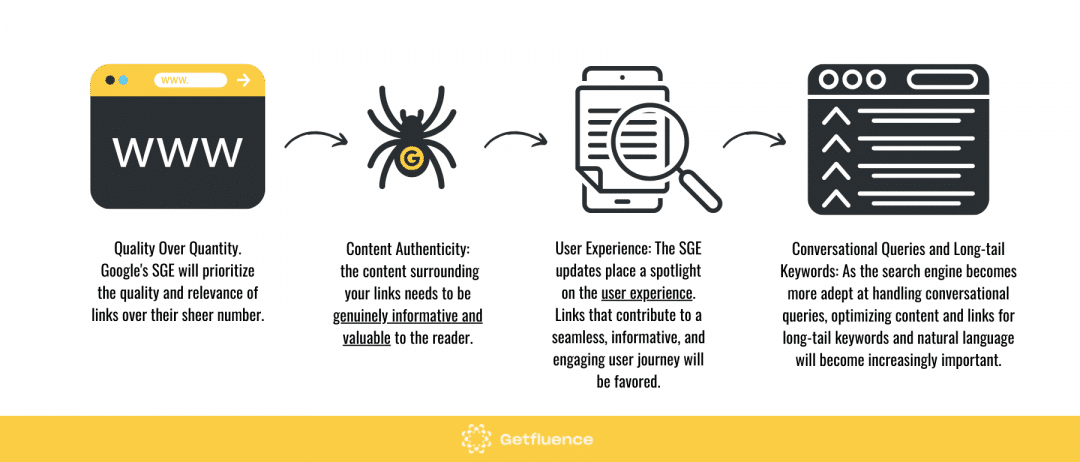
Generative answers do not remove the need for links. They raise the bar on which links count, and they add a second goal: being one of the sources the AI chooses to cite.
- Quality Over Quantity: Piling up a high volume of weak backlinks has been losing effectiveness for years. Links from authoritative, topically relevant sites remain what carries weight, both for classic rankings and for the pages Google is likely to draw on in its answers.
- Content Authenticity: The content surrounding your links needs to be genuinely informative and valuable to the reader. A link placed in a useful, well-written article on a relevant site serves the reader, your rankings and your credibility at the same time.
- User Experience: Google still puts the user experience at the centre. Links that fit naturally into a clear, informative reading journey are worth more than links buried in footers or unrelated pages. The usability of the linked page matters too.
- Conversational Queries and Long-tail Keywords: AI Mode encourages longer, more detailed questions. Optimizing content for natural language and specific needs becomes more important, and so does being mentioned on pages that answer those specific questions.
For example, instead of optimizing only for short, broad terms like "best laptops," you'd also cover more specific questions, such as "What are the best laptops for graphic design students under $1000?".
This approach targets users' real needs and matches the natural, conversational way people now phrase questions to AI Mode, whether they type them, say them aloud or start from a photo.
Adapting to the New Normal

Search habits are spreading across platforms: social networks, video apps, AI assistants such as ChatGPT or Gemini, and Google itself. Google's answer has been to bring generative answers directly into its results pages.
Google still dominates classic search, with 89.94% of the worldwide search engine market in September 2026 according to Statcounter. But the way people use that search is changing, with more questions answered on the page itself.
For businesses and SEO professionals, the takeaway is practical: a content-focused approach to link building is now the baseline, not an option.
This means creating content that serves user needs, getting published on relevant, authoritative websites, and making sure every link and every brand mention adds value for the reader.
The Impact of AI Overviews and AI Mode on Link Building

The first measurable effect of generative answers is on clicks. When an answer is shown at the top of the page, fewer people scroll to the classic results.
A Pew Research Center study based on the browsing of 900 US adults found that users clicked a traditional result on 8% of visits with an AI summary, versus 15% without one. Only 1% clicked a link inside the summary itself.
An Ahrefs analysis of 300,000 keywords points the same way: the presence of AI Overviews correlates with a 58% lower average click-through rate for position 1 (December 2025 compared with December 2023).
This means ranking first is no longer the only goal. Being cited inside the answer, and being named on the third-party sites the AI relies on, also shapes how users see your brand.
For link building, this reinforces a simple idea: the authoritative media and specialist sites that link to you are also the kind of sources AI engines tend to cite. A well-placed article on a trusted site works on two levels: it passes link value to your site and it puts your brand in a source the AI may quote. Links and brand mentions are complementary, not alternatives.
From Search Labs to everyone
SGE spent 2023 as an opt-in experiment in Google's Search Labs, mostly for US users. Google took a careful approach, testing generative answers before showing them by default.
That phase is over. AI Overviews have been shown by default in the US since May 2024, and in more than 200 countries and territories since 2025. With the French launch of July 2026, Google also introduced a Search Console control that lets sites opt out of generative AI features. Google says this choice is not used as a ranking signal outside those features.
The adoption numbers speak for themselves: in its Q2 2026 results, Alphabet reported that AI Mode had more than 1 billion monthly active users.
How to Prepare Your Content and Link Profile

To stay visible in AI Overviews and AI Mode, work on the quality of both your content and your backlink profile.
This means prioritizing links from reputable, relevant sources and producing content that genuinely meets user needs.
One key idea is information gain: content that adds something the other pages do not already say.
Google's quality guidelines put a strong emphasis on content that provides original information, real analysis and first-hand experience, the "Experience" in E-E-A-T. An answer engine that summarizes ten similar pages has little reason to cite the eleventh one.
Add your own perspective, data, personal experience or expert knowledge to create content that stands out and that the AI has a reason to quote.
Diversify formats to answer specific questions (guides, comparisons, FAQs, videos), and structure pages so a clear answer is easy to find.
Adapting to these changes requires a planned approach to content creation and link acquisition, where each link sits in a context that makes sense for the reader.
How the Updates Will Affect Current Link Building Strategies:
While generative search has changed the results page, the importance of backlinks remains.
However, the focus keeps moving from the number of backlinks to their quality and to the relevance of the content they sit in.
Backlinks have long played a central role in search engine rankings, and they continue to be an essential factor in SEO success.
In the past, the common idea was that the more backlinks a website had, the higher it would rank.
That approach has evolved. Search engines have become more sophisticated, and they weigh the quality and relevance of backlinks far more than their quantity.
So, to update your link building strategy, a diversified approach works best.
Strategies include digital PR, sponsored articles in relevant media, guest posting, link insertions in existing articles and business directory citations.
These approaches build a more natural, varied link profile and multiply the places where your brand is mentioned in a credible context, which is what both Google's rankings and its AI answers draw on.
How Getfluence Can Facilitate Adaptation to These Changes?
AI Overviews and AI Mode change how search engines present and select websites. To adapt your link building strategy, it helps to work with an innovative marketplace like Getfluence.
Getfluence connects brands and agencies with more than 70,000 vetted media. It simplifies the purchase of sponsored articles and makes it easy to find media outlets willing to publish your sponsored content.
These articles often include SEO backlinks to the advertiser's website, placed in a relevant editorial context, which makes them valuable assets for your online presence.
More than 5,000 brands and agencies already use the platform. Budgets can be adjusted to each campaign, so businesses of all sizes can use sponsored content to strengthen their link building strategy as search evolves.
The Role of Sponsored Content in a Strong Link Building Strategy

Generative search puts even more weight on the quality and relevance of the sources around your brand, and sponsored content is a direct way to meet those criteria.
Sponsored articles published through Getfluence let you place contextual backlinks within authoritative content, written for the media's own readers.
These backlinks contribute to your website's credibility and rankings, and the article itself mentions your brand on a site that search engines and AI assistants already trust.
By partnering with media outlets that match your industry, you make sure your sponsored content fits the themes and interests of your target audience, which also makes it more likely to earn organic links and mentions over time.
Getfluence's platform also makes it easier to find media outlets suited to your brand and industry, filtering by theme, country and language.
This helps businesses adapt quickly to the changing SEO landscape and keep their link building strategy effective as AI Overviews and AI Mode spread.
Using Getfluence for SEO in the Age of AI Search
Getfluence offers a range of services designed to improve your SEO visibility, drive traffic to your website and build audience engagement.
Our marketplace connects international media outlets with advertisers looking to publish sponsored content. Here's how Getfluence can help you reach your communication objectives:
- Quality Premium Links: Getfluence provides solutions to gain quality premium links for your link-building campaigns. Its database includes thematic and international media outlets, so you can find the right partners for your website.
- Improved Brand Awareness: Build brand awareness by appearing in the most influential media in your industry. These are also the kind of sources that AI answers tend to cite.
- Reputation Management: Keep control over the content published about you in the media. With Getfluence, you can make sure the content matches your brand's messaging.
- Better SEO Positions: Sponsored articles through Getfluence let you secure DoFollow backlinks from established media outlets, placed in context, which supports your positions on Google.
- Press Relations with Guaranteed Results: Choose the media outlets where you want to appear and get your messages published. Getfluence helps you run press relations with guaranteed publication.
Tips for Creating Sponsored Content that Aligns with Google's Guidelines
With Google's emphasis on content quality, sponsored content needs to be useful in its own right.
As we said before, aim for content that addresses user intent and provides real insights and solutions.
Diversify your content formats, incorporating videos, images and interactive elements.
And make sure everything works well on mobile, where most searches now happen.
- Understand User Intent: Get into the mindset of your target audience. What questions are they asking, and what problems are they trying to solve? Tailor your sponsored content to these specific needs, including the long, conversational questions people ask in AI Mode.
- Provide Valuable Solutions: Don't just promote your product or service; offer real value to your audience. Share expert insights, actionable tips and data that genuinely help users.
- Diversify Content Formats: Engage your audience through various content types, such as informative articles, videos, infographics and interactive quizzes. For example, if you're promoting a fitness product, create video tutorials showing how to use it or infographics illustrating its benefits.
- Mobile Optimization is Non-Negotiable: Make sure your sponsored content and the pages it links to are responsive and load fast. Google evaluates page experience through Core Web Vitals, so invest in responsive design and fast-loading pages.
- Leverage User-Generated Content: Encourage your audience to share their experiences with your product or service. Reviews, testimonials and social media posts add authenticity and support the trust signals Google looks for.
- Keep Up with Google's Guidelines: Google updates its guidelines regularly. Follow Google Search Essentials (formerly the Webmaster Guidelines) and the Search Central documentation, and adapt your sponsored content strategy when they change.
Let's look at an example content strategy for a product.

Let's take an example where we have a product to sell and need to build a strategy that works with AI Overviews and AI Mode. Here's what we could do:
Our product: Smart Home Security System.
First, a complete content strategy can make a real difference for your Smart Home Security System. We recommend focusing on educational articles that inform and guide your audience. Consider topics like "Why Smart Home Security Matters," "How to Choose the Right Security System," and "Tips for Securing Your Home." These resources establish your brand as a trusted authority.
With generative answers, you need to cover the different questions people ask, so create in-depth guides.
These guides should cover everything from setting up your smart security system to advanced settings, with clear answers that an AI summary can pick up.
Video tutorials are another key part of your content strategy. Produce videos that give step-by-step instructions for installing and operating your security system.
These tutorials can include troubleshooting tips, user testimonials and real-life situations where your system proved useful.
In short, you need to:
- Create User-Experience Focused Content: Develop content that answers specific questions, provides original insights or offers solutions not easily found elsewhere. This matches Google's emphasis on content that offers information gain.
- Use AI Tools to Check Relevance: Content optimization tools and AI assistants can help you see whether your page covers the questions users ask, so you can fill the gaps before publishing.
And, for link-building strategy:
Guest Blogging: Identify authoritative websites and blogs in the home security niche. Offer guest articles that share your expertise and link back to relevant pages on your website. Focus on security trends, tips or product comparisons to establish your brand as a trusted resource.
Sponsored Articles and Link Building: Create useful resources like e-books, whitepapers or complete guides on home security. Reach out to websites and media in the security and home improvement sectors, and publish sponsored articles that cite these resources with a link to your site. You can use Getfluence to find the right media and manage your campaigns.
Social Media and Influencer Marketing: Use social media channels to share valuable content and engage with your audience. Run contests, polls and Q&A sessions to build community involvement. Work with creators in the home security and tech space to review your product. Their reviews can lead to links and mentions on their blogs or social profiles.
Conclusion
With Google's continued focus on user intent and content quality, keeping your strategy up to date matters more than ever.
What started as SGE in 2023 is now part of everyday search: AI Overviews and AI Mode answer questions directly, cite a handful of sources, and send fewer clicks to the classic results.
Backlinks remain a core ranking factor, and the media that link to you are often the same sources AI answers rely on. The brands that combine quality links, credible mentions in relevant media and genuinely useful content are the ones that stay visible, in the classic results and in the AI answers above them.